What Is a Dry Container?
In global trade and logistics, dry containers are the backbone of cargo movement. From raw materials to finished goods, these containers quietly carry the world’s commerce across oceans, railways, and highways. But what exactly is a dry container, and why is it so widely used?
Understanding Dry Containers
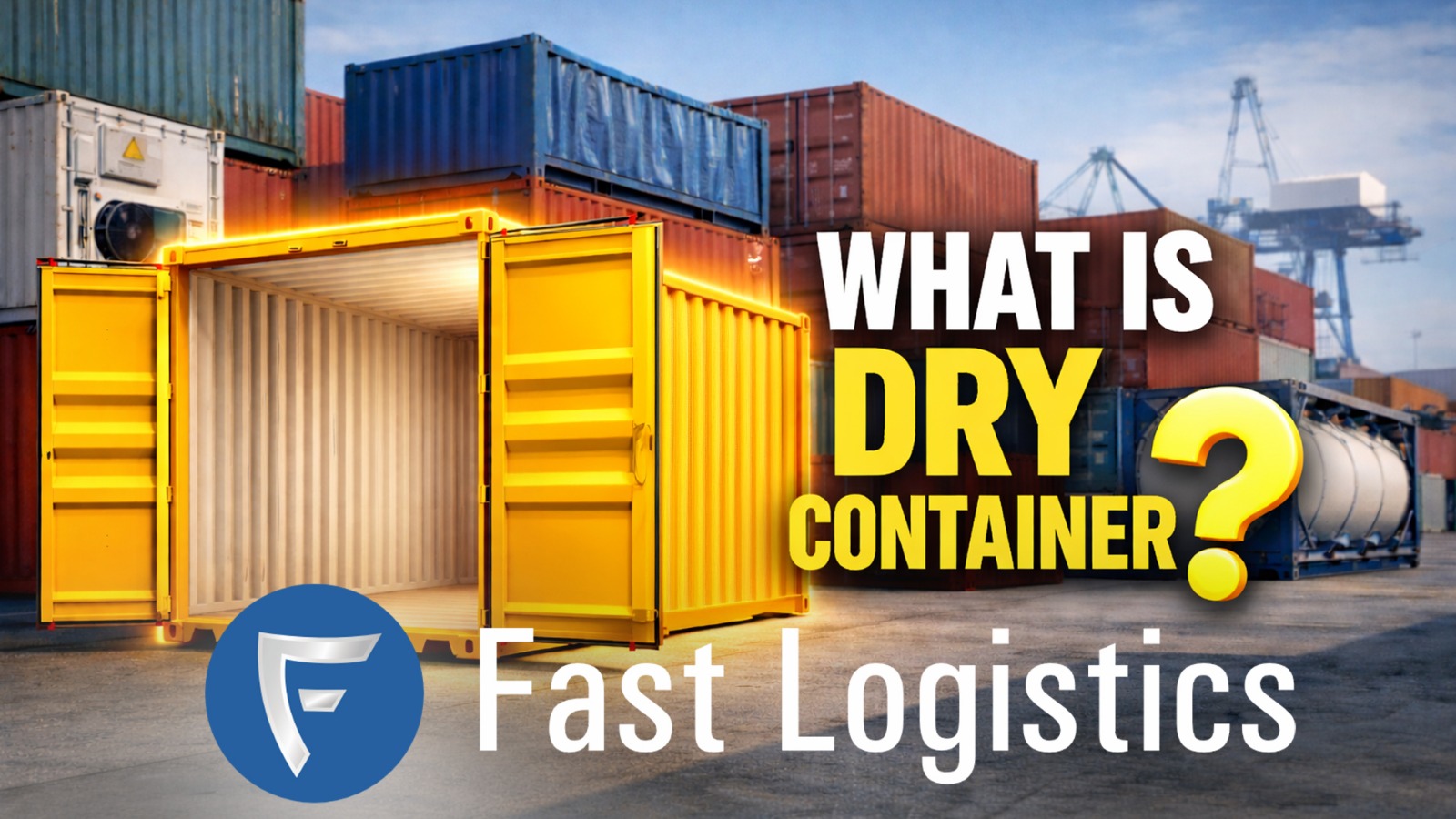
A dry container is a standard shipping container designed to transport non-liquid, non-refrigerated cargo. These containers are full enclosed, weatherproof, and built to protect goods from moisture, dust, and external damage during transit.
Dry containers are commonly used to ship commodities such as coal, metals, grains, machinery, consumer goods, construction materials, and packaged products. Because of their versatility, they are the most widely used container type in international shipping.
Why Dry Containers Are So Important in Logistics
Dry containers offer a reliable and cost-effective solution for transporting cargo that does not require temperature control. Their standardized design allows them to move seamlessly across ships, trains, and trucks, making them ideal for intermodal transport.
The real strength of dry containers lies in their adaptability. Depending on cargo size, weight, and shape, different dry container variants can be used to maximize safety and space efficiency.
Types of Dry Shipping Containers
Not all dry containers are the same. Logistics providers select container types based on cargo requirements:
- Standard Dry Containers (General Purpose Containers)
These are the most common containers used worldwide. Available in 20ft, 40ft, and 40ft High Cube, they are ideal for boxed, palletized, or loose cargo that fits standard dimensions.
- Half-Height Containers
Designed for heavy bulk cargo such as coal, stones, or scrap metal, half-height containers make loading and unloading easier due to their reduced height and strong steel construction.
- Double Door and Tunnel Containers
These containers have doors on both ends, allowing faster and more flexible loading. They are useful when cargo needs to be accessed from either side.
- Open Top Containers
Open top containers are used for cargo that exceeds standard container height. The removable roof allows cargo like machinery or tall equipment to be loaded from the top using cranes.
- Open Side Containers
With doors that open along the side, these containers provide wider access for loading bulky or awkwardly shaped cargo.
- Flat Rack Containers
Flat racks are used for over-dimensional or project cargo that cannot fit into enclosed containers. Their collapsible sides make them suitable for pipes, beams, machinery, and industrial equipment.
ISO Standards and Container Identification
Dry containers follow ISO standards, which ensure consistency in size, strength, and durability across global supply chains. Each container carries a unique identification code (ISO 6346), helping logistics teams track ownership, size, and type.
Container colors can also provide visual cues. While many reflect company branding, certain colors may indicate specific uses such as refrigerated cargo or specialized handling requirements.
Choosing the Right Dry Container
Selecting the correct dry container is critical for cargo safety and transport efficiency. Factors such as cargo weight, dimensions, handling method, and destination all play a role. Using the right container reduces damage risk, improves loading efficiency, and optimizes freight costs.
Capacity and Load Considerations
Understanding container capacity is essential. While a standard 20ft container can carry heavy loads, weight limits must always be respected to ensure safety and regulatory compliance. Capacity is often measured in TEUs (Twenty-foot Equivalent Units), which helps standardize planning across vessels, ports, and transport networks.
Dry containers may seem simple, but they are one of the most important tools in global logistics. Their flexibility, durability, and standardized design make them indispensable for transporting everyday goods and industrial cargo alike.
Whether it’s raw materials moving to factories or finished products heading to markets, dry containers keep global trade moving—securely, efficiently, and reliably.
FAQ-
A dry container is a standard ISO shipping container used to transport non-liquid cargo such as machinery, textiles, grains, metals, and packaged goods.
Dry containers carry cargo that does not require temperature control, including industrial equipment, consumer goods, automotive parts, and construction materials.
A dry container has no temperature control, while a reefer container is refrigerated and used for perishable goods like food and pharmaceuticals.
The most common sizes are 20ft, 40ft, and 40ft High Cube (HC), with High Cube containers offering extra height for higher volume cargo.
Yes. Dry containers are ISO-standardized, making them suitable for multimodal transport via sea, road, and rail across international routes.