Flower Transport
Flowers symbolize beauty, freshness, and emotion—but behind every perfect bloom lies a highly complex and time-critical logistics process. Flower logistics is a specialized segment of perishable goods transportation that demands precision, speed, and expertise at every stage of the supply chain. From farms to florists, ensuring flowers arrive fresh and undamaged is a true logistical challenge.
What Is Flower Transport?
Flower logistics refers to the specialized transportation, storage, and handling of flowers and floral products throughout the supply chain. It involves managing the movement of fresh-cut flowers and plants from farms to wholesalers, retailers, florists, and end customers while maintaining their freshness, appearance, and lifespan.
Because flowers are highly perishable, flower logistics relies heavily on:
- Cold chain management
- Time-sensitive transportation
- Temperature- and humidity-controlled storage
- Careful handling and packaging
The goal of flower logistics is simple yet demanding: to ensure flowers arrive fresh, undamaged, and market-ready.
Why Flower Transport Is Unique
Unlike many other commodities, flowers are extremely sensitive to time, temperature, and handling. Once harvested, their lifespan begins to decline immediately. Even minor delays or incorrect storage conditions can result in loss of freshness, color, and value.
Key challenges in flower logistics include:
- Short shelf life
- Sensitivity to temperature fluctuations
- Humidity control requirements
- Fragile packaging and handling needs
- Compatibility issues with other perishable goods
Global Flower Supply Chain
The majority of flowers consumed worldwide are grown in regions with favorable climates near the equator. Countries such as Ecuador, Colombia, Kenya, and Ethiopia are major global flower producers. These farms are often located close to international airports to minimize transit time.
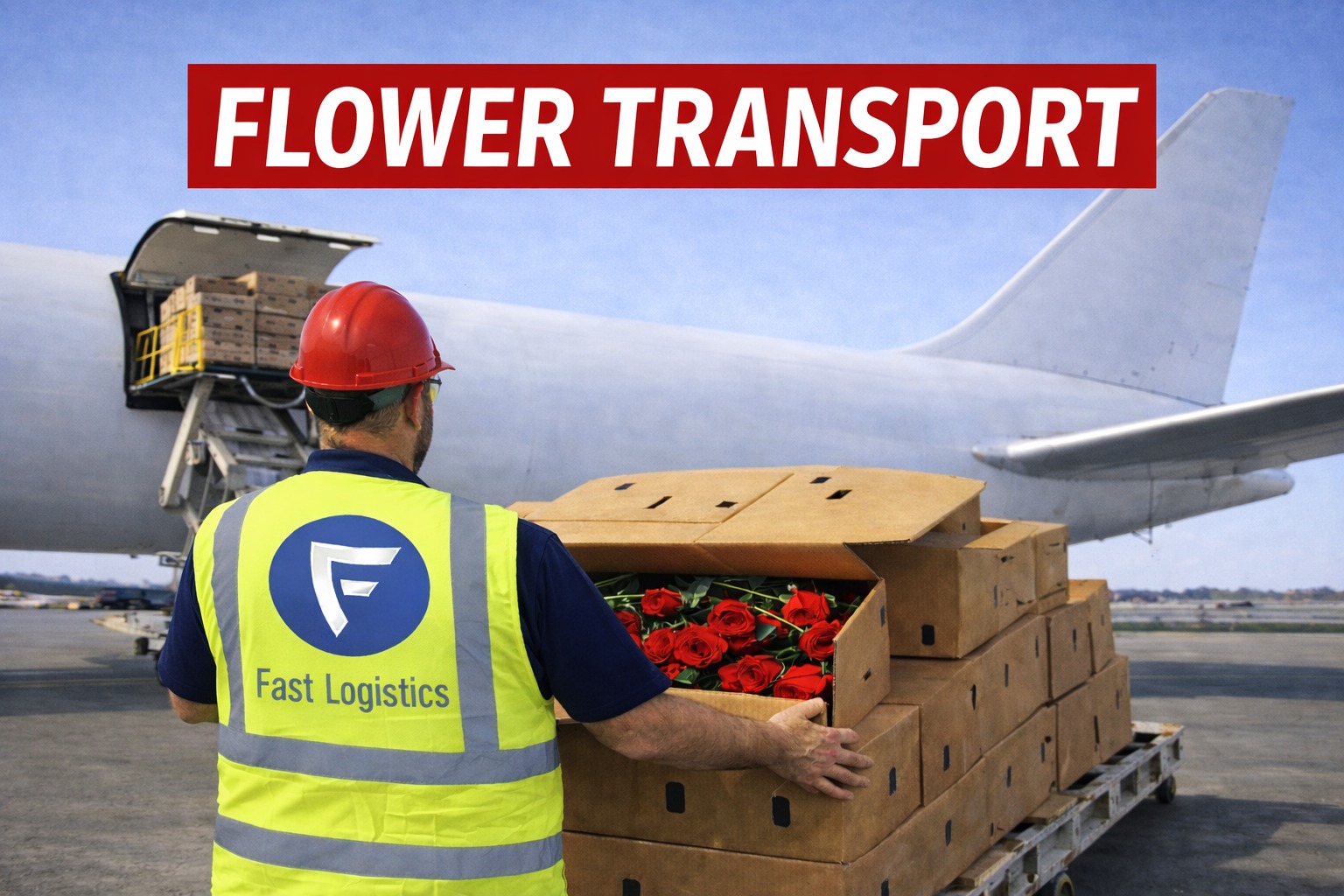
Flowers are typically transported via air freight, as speed is critical. For cut flowers, the time between harvesting and arrival at the final market must be kept to an absolute minimum—often within just a few days.
Temperature and Climate Control
Maintaining the right environment throughout transportation is essential. Flowers require:
- Strict temperature control (often between 2°C and 8°C)
- Controlled humidity levels
- Protection from cold shock or heat exposure
- Segregation from incompatible products
Cold chain logistics plays a vital role, ensuring uninterrupted temperature management from farm to final delivery point.
Handling and Transit Precision
Every touchpoint matters in flower logistics. From careful loading and unloading to fast transshipment at airports and logistics hubs, flowers must be handled gently and efficiently. Delays at customs, improper storage, or rough handling can severely impact quality.
Once flowers reach their destination country, they are quickly transferred to temperature-controlled trucks for inland distribution. Speed and coordination are crucial to prevent spoilage.
Planning for Demand Fluctuations
Flower demand can fluctuate seasonally and regionally, making planning even more critical. Logistics providers must be prepared to scale capacity, manage peak volumes, and ensure consistent service quality without compromising product integrity.
This requires:
- Accurate forecasting
- Pre-planned transport capacity
- Close coordination between growers, freight forwarders, airlines, and distributors
Expertise Makes the Difference
Successful flower logistics depends on experience, infrastructure, and well-defined processes. Logistics partners handling flowers must understand the delicate nature of the cargo and provide customized solutions tailored to each shipment.
With the right planning, technology, and handling expertise, flower logistics ensures that blooms reach their destination as fresh and vibrant as the moment they were harvested.
Conclusion
Flower logistics is much more than transportation—it is a carefully orchestrated process that balances speed, care, and precision. From global farms to local markets, seamless logistics keeps the floral supply chain alive, fresh, and flourishing.
Behind every beautiful flower lies a journey powered by expertise, coordination, and reliable logistics.
FAQ-
Flower logistics is the specialized transportation and handling of fresh flowers using temperature-controlled and time-sensitive logistics solutions.
Flowers are highly perishable. Proper logistics ensures they remain fresh, undamaged, and market-ready throughout the supply chain.
Flowers are mainly transported by air freight to reduce transit time, followed by refrigerated road transport for local distribution.
Most flowers are transported between 2°C and 8°C, depending on the flower type and variety.
Ideally, flowers should reach their destination within 2–3 days after harvesting to maintain quality and freshness.
No. Different flowers require different temperature, humidity, and handling conditions.
Flowers are packed in ventilated boxes with moisture control to protect them during transport.